What happens when your life changes into something you didn’t choose? Not overnight or metaphorically. Literally, cell by cell, who you once were will never again be who you are.
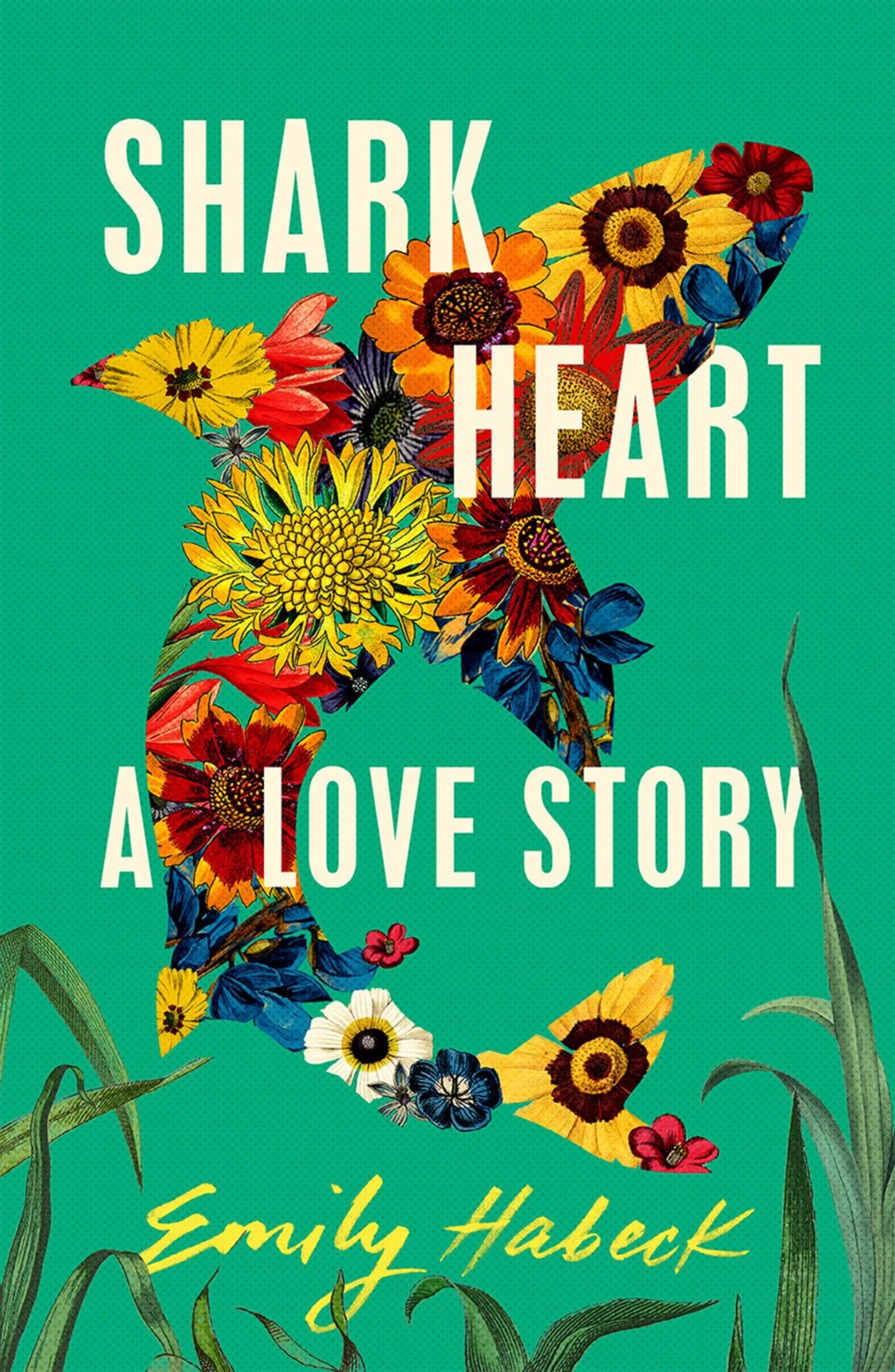
Shark Heart by Emily Habeck isn’t about death. It is about the inevitable curse of change– something we all face if we are living. It’s a novel about chronic illness, about identity loss, about mental health struggles that change your operating system— or the one watching it happen to someone you love. All through the beautifully tragic illustration of a fictional disease, wherein humans are slowly, irreversibly transformed into wild animals.
My first draft of this post was entirely encompassed around grief and loss: a vital role in the novel and likewise an inevitable role to change. However, I became frustrated, because the narrative tone is not one entirely of grief and loss– it is a story of transformation without consent. What happens when you did everything right, and yet you still lose? How can we live in a world where at any given moment what we have can be taken away so cruelly, and society expects us to move on as if it was always meant to be this way? I wish I had the answer. But the truth is: I will be faced with this form of transformation just like all of you. What I cannot guarantee is how or when.
The easiest comparison we can find in Shark Heart is one where we are faced with a terminal or chronic illness. Or we have been the loved one to an individual facing these illnesses. Many Goodreads reviewers frame the illness metaphor through cancer, dementia, or bipolar disorder. But rather than catalog diagnoses, I want to sit with the disorientation of change itself. Because, sometimes, we feel like we are being punished by our own fates and then the systems in place to uphold a society come crashing down and update our narratives beyond simply our immediate suffering. And that is discombobulating beyond reason.
Back in high school, I was once sitting with my grandfather, when he began to reminisce about his time in the military. He rarely talks about his time serving– I know he was deployed in Germany, but not during any active war. But as he spoke on that specific day, he disclosed two things, “I remember, we’d be so mad at each other because every single night someone new would be crying like a little kid, wishing he could see his mommy again.” And, “but then you spend the days thinking about how soon you’d be home, how everything would be different, all the stories everyone would get to share. All the things you learned. But you walk through the door to realize everything is exactly the same, and the only thing that’s changed is you.” He got quiet after that moment and has yet to reopen that discussion since.
Transformation is not always as explicit as something Franz Kafka would write about in Metamorphoses (Kafka, 2009). We don’t always wake up one morning to discover we are a bug and the world around us despises our grotesque forms. Sometimes our transformations are far more subtle, like The Hero’s Journey– showing resistance to a quest only to return home, changed for better or for worse (Campbell, 2008). And still, other times, you feel as if you are the only one who stayed the same and you look around to discover the world is no longer what it once was.
Take, for instance, Dr. Viktor E. Frankl, who wrote Man’s Search for Meaning (2006) as a means to grapple with post-Nazi Germany and to make sense of him surviving not one, but four separate concentration camps: Theresienstadt, Auschwitz, Kaufering III, and Turckheim. Frankl argues several times that resistance to change, insistence to stay how things were within those camps would have cost him his life. (If you haven’t read this book, I highly recommend it, and I will do my own deep dive on it in the future). However, every step of the way, change is happening at Dr. Frankl. He, at his core, never changed; it was the world around him and systems in place that sent him down an extended path of suffering, and thankfully ultimately, survival.
Now we have Shark Heart, which encompasses all of these forms of non-consentual change, and forces us to take a critical focus on how Lewis, a man who did everything right, is still left to become a great white shark. His work fires him, his friends stop talking to him, and the very air he breathes becomes hostile as his lungs are mutated into gills. I have unfortunately witnessed many clients in my time as a clinician who seek me out specifically to process how systems designed to support them have failed– how a diagnosis of depression from twenty years ago will now leave them referred to a mental health counselor for their chronic physiological pain. How my own sister, who has a physically limiting neck injury has now been unemployed for five years, stuck in a loop of “explain this gap in your resume,” and thus denied access to disability.
So here we are, thrust into the fates of the primordial chaos, asking, “why? What now?” After everything I have written, what’s the deciding factor that keeps us going when what we have now can never be what we have forever? Why should we hope for good when we deduce it must eventually hurt again?
Well, Dr. Frankl stated, “everything can be taken from a man but one thing: the last of the human freedoms—to choose one’s attitude in any given set of circumstances” (Frankl, 2006). Lewis’s slow loss of humanity becomes less about physical transformation and more about agency. Even as the people in his life begin treating him like something other than human, he must decide whether to let their fear define him—or to find a new self worth living for.
This aligns with Wren’s story as well. She is faced with the loss of several loved ones– a tragedy that seems to follow certain people along their entire story. Wren is dutifully cast as the strong one for not just one loved one who is diagnosed with the tragic illness, but multiple. She tries her best, she keeps a brave face, and she seems to sacrifice her happiness for their wellbeing. Inevitably, she breaks. The weight of carrying equilibrium for your loved ones is heavy, and it is so easy to shatter under that weight. But, like Wren, you are not broken– you are a witness and active participant to your own metamorphosis where the world you once had can never be the same. And when you come home after the long journey of carrying the role of caregiver, you see how much you have changed but the world stayed exactly the same.
I don’t think it is a coincidence that Habeck chose to write Lewis in as a great white shark. My sister’s hyperfixation growing up was on sharks– her husband proposed to her with a custom ring that are two hammerheads swimming towards a heart-shaped diamond. She loved stating random facts about all sorts of sharks. One, which she deemed as “overrated” is that great white sharks can never stop swimming– their gills are designed to only work while in active motion. So if they stop swimming, even to sleep, they will suffocate. Like these sharks, human resilience and the human experience demands only one thing: that we keep going. We can fight, cry, complain, or wish that things were the way they were before, all we want; at the end of the day, we can swim or we can drown.
On Becoming a Fish
I have pulled from Shark Heart to create an analogy for my clients to grasp an understanding of drastic change while in the midst of grieving what was.
“Imagine you are a monkey,” I start. The client smirks– I am notorious for my psychoeducation to become an analogy or metaphor. I continue, “you’re an excellent monkey. You climb the tallest trees, you carry bushels of bananas with your toes, you even became the official teacher of swinging from vines. ‘You are a consistently reliable monkey,’ your friends all say.” The client nods, likely wondering why I’m so obsessed with adding monkey-related descriptors.
“But then one day, you wake up in the water to discover you are a fish.” I pause for a beat. I know I sound ridiculous, but I know how this story ends, and I know my client is living through this story. “You look around, until you see you’re living right next to the tree you climbed just yesterday. You’re not bad at being a fish, in fact you’re just the right size to swim comfortably in this lake. You liked swimming in this lake back when you were a monkey, and you can even breathe underwater now!” The client is slowly nodding.
“The thing is, you’re not even entirely upset that you have to live the life of a fish. But your old friends keep asking you when you’re going to grab more bananas. You keep thinking about how typically on this day at this time, you’re teaching the younglings how to do upside-down vine swinging lessons. You miss knowing what it feels like to breathe fresh air. But that’s not your life anymore.” My client at this point is listening, but no longer watching me. “You’re left with two options, and neither feel fair,” I say. “You can learn to navigate the underwater world, or you can keep staring above, thinking about everything your body used to allow you to do so freely.”
One final pause, and the truth we all try to hide away, “sometimes, even if you choose to swim, like I know you will, you’ll think back on your time as a monkey and think, ‘damn, what I wouldn’t give to climb that tall tree just one more time.’”
References
Campbell, J. (2008). The hero with a thousand faces (3rd ed.). New World Library. (Original work published 1949)
Frankl, V. E. (2006). Man’s search for meaning (I. Lasch, Trans.). Beacon Press. (Original work published 1946)Kafka, F. (2009). The metamorphosis (S. Corngold, Trans.). W. W. Norton & Company. (Original work published 1915)
 Chapters, Cats, and Chaises
Leave a comment