Do you have any memories of being a child, making a mistake, having your caretaker demand, “why did you do that?” and you freeze up, shrugging, and saying, “I don’t know?” As a graduate student, my professors told me “why” is the most incriminating question you can ask someone. At its core, it is permission to judge someone else’s decision-making and critical thinking. And if we want a client to clam up and refuse to explore their narrative with curiosity, the fastest pathway is asking, “why?” over and over again.
What are our options, then? We typically learn to approach any thought with curiosity– “I’m wondering if that pit in your stomach is trying to tell us anything?” or, “I can see you made some choices. What outcome were you hoping for?”
Imagine now being a teenager, trying to navigate a world that functions differently at home, at school, and everywhere in between. Every adult greeting comes with the same question: “What do you want to be when you grow up?”
Anytime you start to answer, you are met with, “why?” Suddenly, being an artist doesn’t make enough money. Being a woman in a corporate setting will make you a bad mom. A doctor sounds great, but you never applied yourself enough to be taken seriously. Why would you say such a thing? Why are you acting like you can make such grown-up decisions when you’re just a stupid teenager?
Wait– when did this conversational piece become an interrogation?
And since when have adults been mind readers? Why do they say I’m a know-it-all when they’re telling me how to think and feel? Didn’t you just say you’re filing for bankruptcy, and now you’re telling me which careers are a wise financial decision? Excuse you!
Oh I’m the one that spoke out of line? Great. I’ll sit down and shut up.
Hold on– now I have an attitude? Since when? You asked me what I want to be when I grow up, and now I’m being ridiculed for acting childish?
Well guess what. At 16 years old, I am still a child.
Maybe physically I look fully grown, and maybe I have more permissions than I once did, but at my core– developmentally speaking, I am a kid. And you stand here expecting me to behave like an adult while you continue to treat me like a kid. You seem to intentionally place a spotlight on me to give permission to the real adults to make a joke out of my attempts to behave how you see fit. And you wonder why I act aloof while you continue to laugh when I am trying to meet all of your impossible explanations.
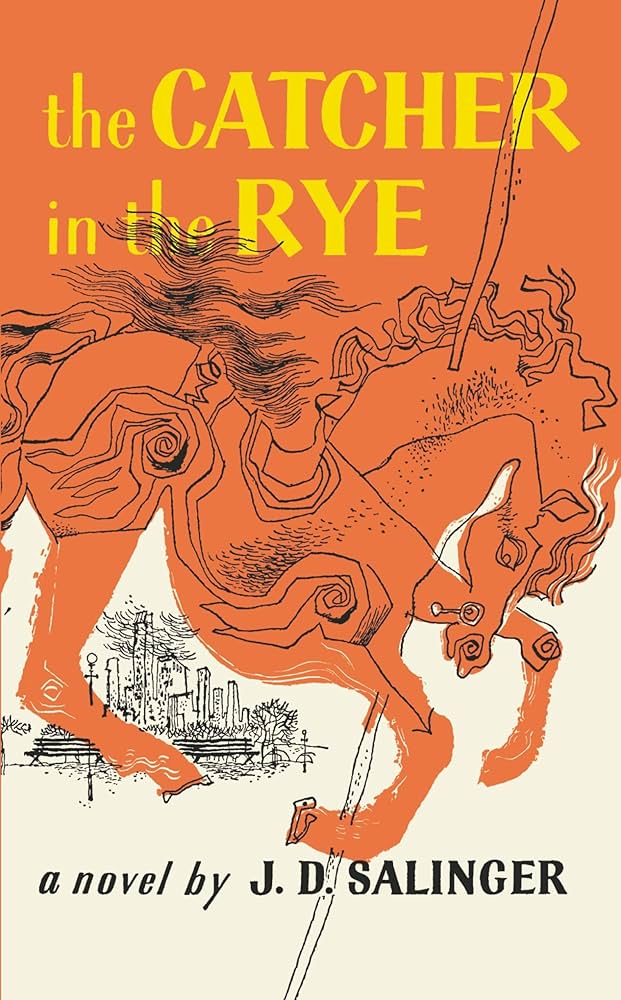
In walks Holden Caulfield from J.D. Salinger’s The Catcher in the Rye. A character written all the way back in 1951 who still leaves a lasting impression on young adults and high schoolers. To be completely honest, Holden didn’t resonate with me personally, but I understand why he’s beloved by so many of my clients. He echoes someone they already know: themselves at 15, cornered into an adult role they were never equipped for. He is also the character most referenced by my plethora of clients within my office.
Holden is someone we expect too much from and give too little to. What Holden truly needed was not a firm hand, but an adult who was secure enough to take the titular catcher’s mit, and let him return to the rye field as the child he was. He needed a caretaker to take proper care of him.
In each situation we come across in his own miniature Odyssey, we see the patterned behaviors of an adult assessing his age, and either neglecting him or punishing him for not behaving more like an adult. No parental figure steps in to help him home. He seems aware of how simple an empty promise can take him, and he rides the night away through ritualized performances he has learned will appease the grown-ups enough to leave him alone.
Holden’s ongoing pattern of avoidance was what fired my therapist cylinders, wondering if Holden was struggling with something we now call Complex Post Traumatic Stress Disorder. Dr. Arielle Schwartz would describe C-PTSD as, “a result of long-term exposure to traumatic stress, rather than a response to a single incident” (Schwartz, 2017). In other words, when someone’s sense of safety and security are challenged for an extended time, you are left in a chronic state of fight or flight.
Taking away Allie, and removing what took place in Mr. Antolini’s home, we still have a troubled kid who believes his job is to take on the world entirely alone. When he finally gets to see his little sister Phoebe, they both instinctually know that their mom will likely have a headache and leave Phoebe to her own devices. When Holden finally makes it home, his father ships him right back out to be someone else’s responsibility. The only person who shows genuine concern for Holden’s well-being is another child– his sister, raised in the same environment. Holden feels he must navigate the world alone, because that is all he has ever known– and he tries so desperately to keep Phoebe from experiencing the same cycle which she shows signs of already entering.
What can we do for these kids? If they are showing signs of C-PTSD, what help is there to offer them, either as still children or in many years as struggling adults? There is a newer framework these days called trauma-informed care. It is not a means of treatment, but a framework for understanding and response. SAMHSA provides a concise form of principles for trauma-informed implementation:
“1. Safety
2. Trustworthiness and Transparency
3. Peer Support
4. Collaboration and Mutuality
5. Empowerment, Voice and Choice
6. Cultural, Historical, and Gender Issues” (SAMHSA, 2014).
What we have found is that when our decision-making model includes looking at the whole person rather than pathologizing them, we see greater breakthroughs in recovery.
What does this mean for our protagonist? As simply as I can put it, Holden is not a delinquent in need of discipline — he’s a child in need of safety. Holden begins to feel less like the product of poor choices and more like the natural consequence of his environment and support system.
Whether or not we join the literary analysts to explore Holden’s reliability as a narrator, he is a child. A child does not, by nature, view the world as something hostile that they must navigate alone. It is something conditioned within you when
1. Your sense of safety has been routinely threatened
2. Your role models lie– or they prove to be “phony”
3. Your friends isolate you or leave you feeling left out
4. People tell you what’s wrong with you instead of giving you space to share your internal world
5. They take away your agency
6. Your past is silenced, or you are forced to move on from Allie on everyone else’s timeline.
Holden’s journey is a study in what happens when a teenager is interrogated rather than understood– when the world demands “Why?” instead of “What happened?” This is all the more ironic by how it is treated within the public education system: encouraging students to ask why. Why is Holden fighting his roommates? Why did Holden think it was smart to call Sunny up to his room? Why wouldn’t he just go home? Why is he so self-centered? Why is he so annoying? Why do we have to read this super old book in the first place?
Maybe Holden’s story reminds us that when we ask ‘Why?’ of a hurting teenager, we’re not inviting curiosity — we’re cutting them off from telling us what happened. It’s a Möbius strip of misunderstanding—an endless cycle in which Holden’s yearning for peace and care is met not with support, but with judgment. We fixate on his behavior instead of asking what led him there. Or maybe Holden wasn’t meant to be understood by teachers. Maybe he was speaking directly to the kids in the back row — the ones already preparing to say, “I don’t know,” when asked why they’re not meeting expectations, rather than being asked how the adults can help.
References
Schwartz, A. (2017). The Complex PTSD Workbook: A mind‑body approach to regaining emotional control and becoming whole. SourcebooksSubstance
Abuse and Mental Health Services Administration. (2014). SAMHSA’s concept of trauma and guidance for a trauma-informed approach (HHS Publication No. SMA 14-4884). U.S. Department of Health and Human Services. https://library.samhsa.gov/sites/default/files/sma14-4884.pdf
 Chapters, Cats, and Chaises
Leave a comment