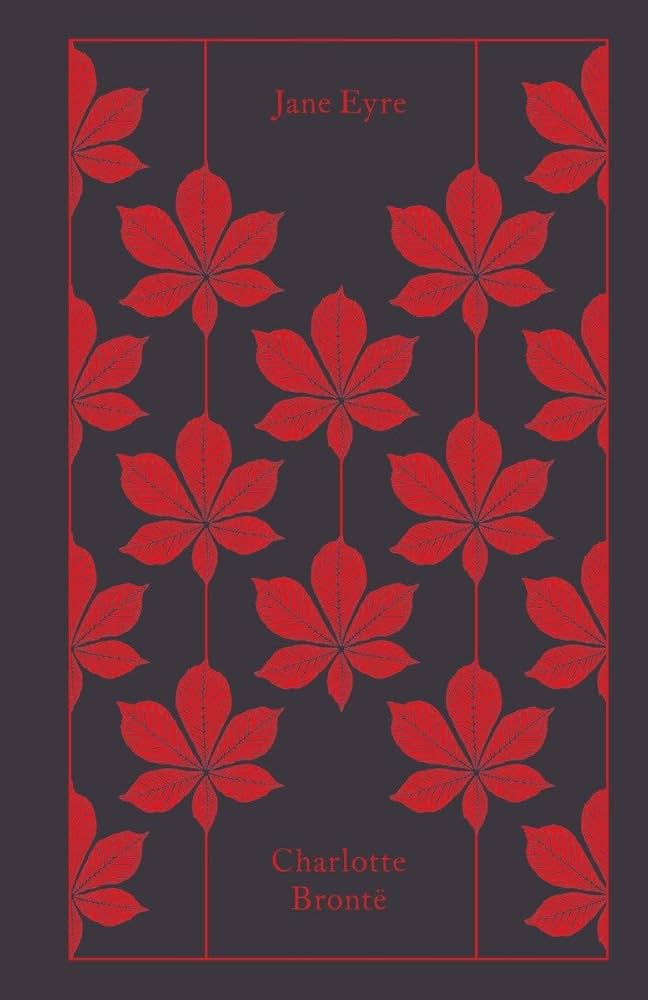
Jane Eyre by Charlotte Brontë was introduced to me through pop culture as a love story. This is perhaps a reason it has taken me so long to read it. While authors like Jane Austen are excellent commentators on the Regency era, novels of that time never fully held me. That is, until I buckled in and began this week’s novel: a love story, perhaps, but more a love story to self and liberty.
Merriam-Webster.com/dictionary/liberty
Liberty noun
1: The quality or state of being free:
A: The power to do as one pleases
B: Freedom from physical restraint
C: Freedom from arbitrary or despotic control
D (1): The enjoyment of the same social, political, or economic rights and privileges enjoyed by others in a society free of arbitrary or unreasonable limitation or interference; (2): freedom from being held in slavery
E: The power of choice
This novel starts with a spitfire young girl who (as regency era novels tend to require) is orphaned and living with her hateful aunt and cousins. Within a matter of pages, we learn everything there is to know about titular Jane: she does not play games with her truth and her reality. When her aunt tries to turn schoolmasters against Jane, insisting that the child is a liar, Jane flips the narrative and tells her aunt exactly what she thinks of someone who treats a child with cruelty.
Throughout the entire story, Jane is battling the constraints of her era and the internal world she holds with deep integrity. She eventually becomes a governess for a French child and falls in love with her employer (a much older gentleman), Mr. Rochester. There is a major plot twist that I had missed for over two decades, that I will not spoil here. But inevitably, Jane must choose whether she stays with Mr. Rochester or not. That decision, and the time Brontë gives Jane before she makes it, is where this novel reveals what it truly values.
It feels like the world views Jane Eyre as a love story. Lizzy met her Darcy: two strong personalities have met their match and find happiness. However, there is about 30% of the novel left to read before Jane chooses her happy ending. And the girl remains mule-headed and stubborn until the very end– even choosing to risk death by starvation and hypothermia than return to people who have wronged her and ask for help.
Perhaps the most quotable line in Brontë’s novel is, “I am no bird; and no net ensnares me: I am a free human being with an independent will.” Which is stated by the titular character in a moment of emotional intimacy from her love-interest.
I mean. Girl. Relatable.
Me: *visibly upset and worked up over a minor inconvenience*
Friend: You look stressed *goes to hug me*
Me: DON’T TOUCH ME!
I digress. Why do I agree that this book is a love story, but not in a traditional sense? From an outside perspective, the novel is capable of being read with an Austenian stance. The female protagonists in Austen’s novels also pursue integrity and self-worth over traditional marriage. However, Brontë takes the journey a few steps further than other novels of its era that I have read thus far and never forgets Eyre’s ultimate goal: pursuit of self-actualization. We can close our eyes and point to any page, and Eyre’s core understanding of self remains true. Taken apart, they are great tattoo options. Taken together, these lines reveal that our character truly prioritizes internal alignment over external approval.
Let’s look at GoodReads’ top quotes from the novel, in no particular order:
- “I would always rather be happy than dignified.”
- “I care for myself. The more solitary, the more friendless, the more unsustained I am, the more I will respect myself.”
- “Life appears to me too short to be spent in nursing animosity or registering wrongs.”
- “‘I am not an angel,’ I asserted; ‘and I will not be one till I die: I will be myself.”
- “If all the world hated you and believed you wicked, while your own conscience approved of you and absolved you from guilt, you would not be without friends.”
What Jane seems to be in constant pursuit of is “self-actualization.” There are many theories out there that broach the topic from different directions– originating from Dr. Kurt Goldstein, which was then added to the famous pyramid of Maslow’s hierarchy of needs (Maslow, 1954). This pyramid argues that if we cannot consistently meet the needs of lower stages in our pyramid, we cannot reach opportunities to thrive in the higher stages.
For example, one of the lowest needs in this pyramid is “safety.” If we do not know where our next meal is coming from, or if we do not know if we get to sleep under a roof tonight, how can we look at the higher stage of “esteem?” I often use this pyramid as a means to explore self-compassion with my clients. There’s no need to shame your poor grades in high school when your parents were going through a divorce and you were simply trying to survive.
Something I appreciate about Jane’s story, however, is that part of Jane’s defining stance for safety is the constant pursuit of liberty. She knows she deserves better, and if that is at risk: her very being is at risk. She turns Maslow onto his head and says that we can be self-actualized while almost dying of hypothermia out of sheer stubbornness. Jane at a young age learned that the person who needs to be her greatest advocate is herself, lest she lose her freedom to exist.
Jane Eyre is a regency novel I did not want to read. I had assumed it would be another stereotypical story of its time. Instead, I had the opportunity to read a deep, well thought out character analysis of someone whose safety and security comes from self-actualization. I read about someone who seeks love from herself first, then makes educated decisions that honor that version of herself which others might try to cage or stifle.
This leaves me considering the following. In times of fear, unrest, and global anxiety, what are the things that honor who we are at our core? What are the rules and expectations you adhere to, but that denies your most actualized version of self? How can your opportunities for independence foster moments of liberty and self-love without total isolation? Across eras and circumstances, the work remains the same: noticing where we have learned to compromise ourselves, and choosing, when we can, to stop.
References
Maslow, A. H. (1954). Motivation and personality. Harper & Row
 Chapters, Cats, and Chaises
Leave a comment