“The one thing they love more than a hero is to see a hero fail, fall, die trying. In spite of everything you’ve done for them, eventually, they will hate you. Why bother” – The Green Goblin (Spider-man, 2002)
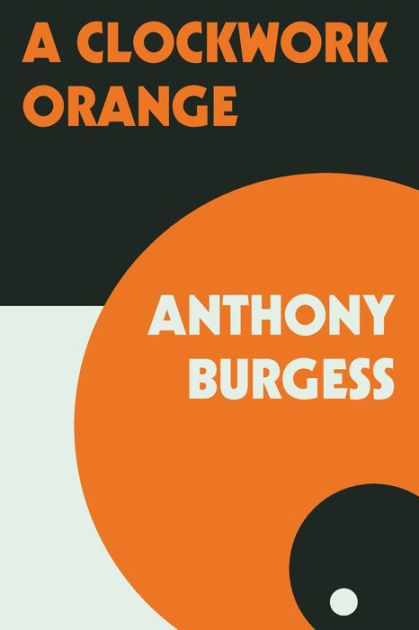
Did you know that Anthony Burgess was not a fan of his novel A Clockwork Orange? Maybe that is too bold of a statement. In the copy that I own of the novel, it begins with a foreword from Burgess where he states he cannot understand why this is the novel that the world placed his legacy on, and that he still resents the US publishers for removing the original final chapter and thus the true ending for the sake of consumer preference.
Before we explore the journey of the publication, let’s look at what A Clockwork Orange is as a novel, and what it is trying to do. As a quick disclaimer, I am not a huge fan of the book. I remember thinking that the mature content was too much for the age where I would have loved exploring the underlying message.
A Clockwork Orange is a novel that follows the story of Alex, a teenager who is navigating life through violence. He loves to inflict pain on others, only demonstrating humanity from his love of classical music. The novel follows several of Alex’s crimes in gruesome detail, all from Alex’s perspective, until one day, a member of his gang turns on him. Alex is arrested, and he is taken to a type of conversion therapy against his will.
Using classical conditioning, Alex is forced to behave as a model citizen, or else he will experience debilitating pain. Alex is then returned to his hometown, expected to turn over a new leaf, and is instead still hated and punished by all the people that he wronged pre-conversion therapy. At the end of the story, Alex is given the opportunity to return to his wicked ways without pain, and gleefully accepts. This thus asks the question: can you treat something organic (like an orange) to be operated as a machine (like a clock)?
As a meta-analysis to many forms of therapy, this is a great question– is Applied Behavior Analysis (a common intervention for neurodiverse individuals to present as neurotypical) truly helping people, or simply making the decision for a population on how they should want to act? Can we force people to act ‘better’ when they never said they wanted to? Can an organic human function in a synthetic system as well as a robot?
While these questions present as the crux of Burgess’s novel, an interesting factor is the aforementioned chapter which was cut from American publications. The novel, as written by Burgess, concludes with a much older Alex, who has grown tired of his reckless ways, and by no choice other than free will, decides he wishes to settle down and abide by social rules and expectations. It is a softer landing than the shock-factor of the prior chapter, but I personally find that concluding this story with, “give it time, humans get tired,” changes the entire thesis which Burgess was likely trying to present. For example, maybe the question we are meant to ask is, can you rush an orange to ripen before its time? That fits with the ambiguous title, too.
For as much as I disliked this novel, there are countless avenues I could go down to explore. I might never understand why so many, “you need to read this before you die,” lists include A Clockwork Orange, but I cannot discredit it for being a conversation-starter. For this reflection, my personal thoughts continue to be around the publication. Because while I could try to answer the plot-driven questions above, I am more interested in the American fascination on tragedy– watching the hero fail– and growing bored of quiet conclusions where a violent character says, “nah, I wanna join an HOA,” for no other reason than, “I’m tired.”
Why did American publishers cut the redemptive ending? Is it truly because American audiences want spectacle over redemption? We tend to want the villain to stay a villain– and we’re more comfortable with irredeemable evil than we are with the messy, boring reality of people changing slowly over time. But maybe that’s an oversimplification.
For anyone that enjoys musical theatre, they have probably heard of the play Hadestown (2019). It is one of my personal favorite shows as of late (a few clients have mentioned mid-appointment, “you LOOK like you know mythology off the top of your head,” so it’s not too surprising I latched on to this musical). The show follows the story of Orpheus and Eurydice, and it opens and closes with the same song. The lyrics to the opening/finale include, “It’s an old song, and we’re gonna sing it again,” and, “It’s a sad song, it’s a sad tale, it’s a tragedy. We’re gonna sing it anyway” (Mitchell & Chavkin, 2019). The tune follows in line with James Cameron commenting on creating the film Titanic (1997)– you know the ship’s gotta go down. So how do you get audiences to watch it anyway?
In Hadestown, they say it is to hope that maybe this time, Orpheus wins. We know he will fail, and we will grieve with him each time. But in the midst of retelling the tale, there is a chance that he can win. So we raise a glass to the man who can never win, because no matter how many times we retell the story, we hope, we hold our breath, and we dream of the day Orpheus looks ahead– we watch hoping to will the unsinkable ship to dodge the iceberg– and we wish to see Alex break out of the tortuous conversion therapy and still choose the straight and narrow path in chapter 20– without need of the cut 21st chapter.
But what therapy has taught me is that people don’t change in single climactic moments. They change in the accumulation of small choices made over months and years. Dr. Bruce Perry writes in What Happened to You? (2021) that the brain doesn’t rewire overnight—it requires repetition, safety, and time. You can’t force an orange to ripen faster by speeding the clock forward, and you can’t simply stop being sad because I told you to try being happier. You can only create the conditions for growth and wait. And maybe put on some sunshine from time to time.
This is why the 21st chapter matters. Burgess wasn’t saying Alex had a sudden moral awakening. He was saying that given enough time and the freedom to choose, people often just grow up. They get bored of destruction. They want something quieter, and after youth-culture, there’s still a full life to be lived– this time without a spotlight, because it’s real. And American publishers seem to have cut it because real doesn’t sell like spectacle and youth does.
American publishers see the grip that humans have on these types of stories, and they seem to want to create the next Hamlet. But I think, like what Burgess seems to be arguing, there’s a time and a place. Not everything can end with everyone dying, or else I’d just be depressed all the time. Sometimes what we need are realistic depictions of human complexity. Healing in any human scope takes time, and we don’t get the instant gratification of “win spectacularly, or fail tragically.” Sometimes we hit rock bottom so that we can learn it’s not all that exciting down there, and that’s motivation enough to change.
Sometimes that motivation is just time. There’s no midnight come-to-Jesus moment, there’s no dramatic epiphany. For many people, they simply don’t like where they’re at anymore, and then change. We don’t have much representation of that population in the media from what I can tell; and if UK publishing hadn’t allowed Burgess to produce what he wrote in its entirety, we’d have even less. For how much I disliked my time reading this book, reflecting on that 21st chapter does give me new respect again for such a shocking content-warning-filled book written in a partially-fake-language to have the courage to pull a Forrest Gump and have the protagonist simply wrap up by saying, “I’m pretty tired, I think I’m gonna go home now.”
And for the Green Goblin– maybe we do get bored of the hero eventually. This is less because we hate them, and more because we have lives to live as well. If the hero is doing well, we wish him nothing but the best. But chances are, we won’t need an update unless he’s fallen. Not because we want to see him fail, but to make room for our own rock bottoms and redemption arcs, at whatever pace we need to take them.
References
Cameron, J. (Director). (1997). Titanic [Film]. Paramount Pictures; 20th Century Fox.
Mitchell, A., & Chavkin, R. (2019). Hadestown [Musical]. Walter Kerr Theatre.
Perry, B. D., & Winfrey, O. (2021). What Happened to You? Conversations on Trauma, Resilience, and Healing. Flatiron Books.
Raimi, S. (Director). (2002). Spider-Man [Film]. Columbia Pictures.
Zemeckis, R. (Director). (1994). Forrest Gump [Film]. Paramount Pictures.
 Chapters, Cats, and Chaises
Leave a comment