We all know the saying, “you can’t outrun fate.” It is a tale as old as time– Oedipus’s dad outrunning the fates led to Oedipus trying to outrun his own fates, ultimately fulfilling both in one fell swing. It is, I believe, meant to be a comfort to us mortals, saying that you can spend your life in fear, or you can enjoy the time you’ve got. But what about times when it’s not fate that we try to escape, but truth?
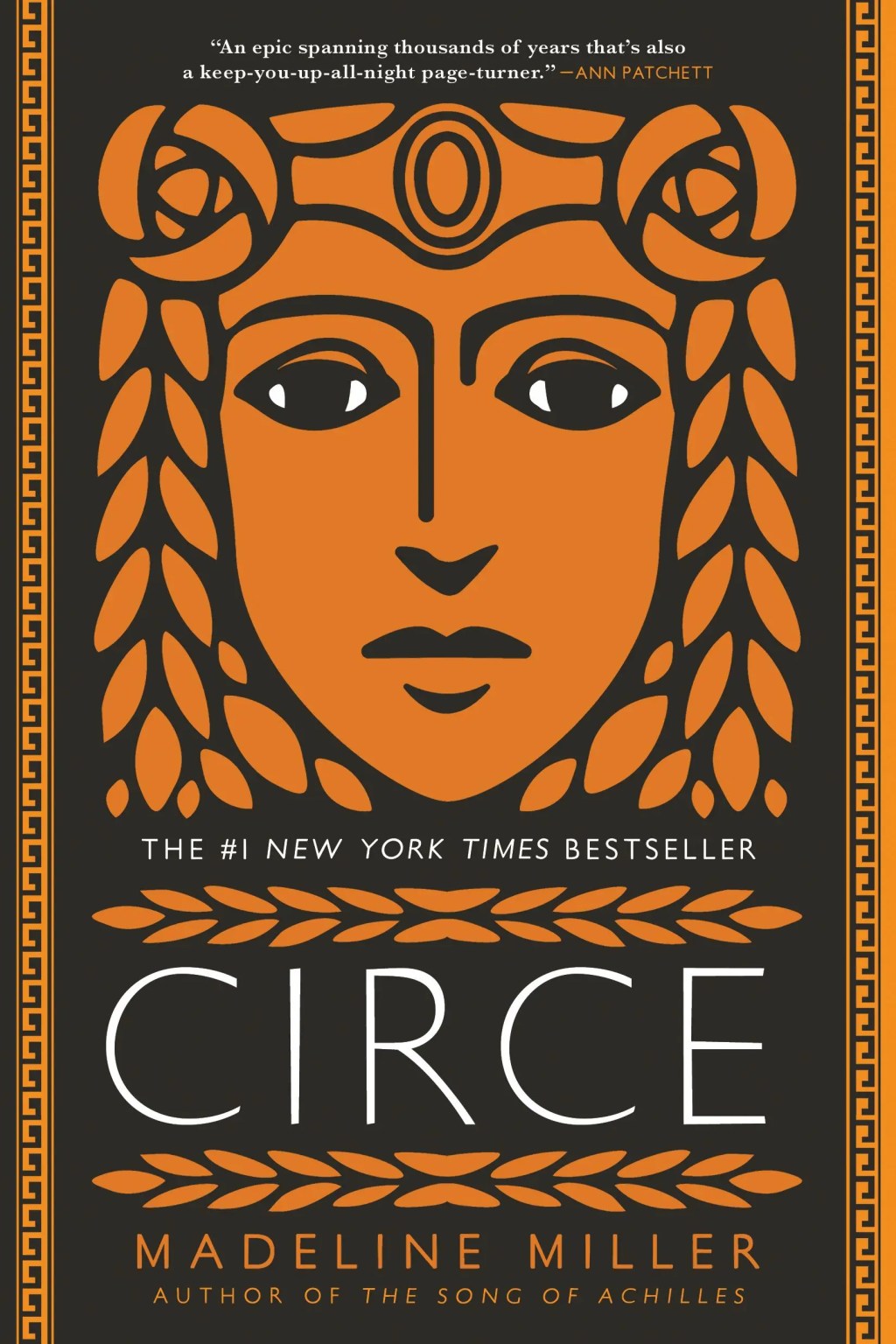
I recently sat down and read a book that has been sitting on my shelf for about 8 years now. Entering books mostly blind is my preferred method– so I felt that the title and accolades for Circe by Madeline Miller was enough context for me to dive in. And it was worth the hype, sitting at a solid ⅘ stars on my many, many book-tracking apps.
The story follows the infamous nymph/witch/daughter-of-titan-Helios: Circe, and her journey to understand herself, her worth, her agency, and her relation to the world of gods and mortals while she lives somewhere in between. Throughout the story, we hear classic mythological tales from the perspective of a woman banished on an island, and in complete denial around her own loneliness. It was an easy read to get through, although I took several days’ breaks in between, just due to my own to-do list of being a grown adult getting in the way.
What stuck with me was how we got to witness truth as power. Circe spends the better part of the story either immediately confessing to her crimes, or choosing to withhold information as an attempt to move on; neither of which fulfilling Circe’s arc for connection despite flaws.
Have you ever held a truth, and recognized how much power you hold with its knowledge? There are other truths that we hold in another type of power. I have gone on a soap box before about my time in high school, and as an adult, I have entered these types of discussions:
Me: My high school teachers were such know-it-all’s. They’d always toss around, “find your Kairos.” As if a bunch of 15 year olds will understand that your opportune moment isn’t at the bowling alley, or fighting online.
Peer: Well…. As a communications major, you’re oversimplifying it.
Me: Yes. It’s an important word. And I don’t like it.
Peer: It’s a good word, though. Like, if you’re fighting for women’s rights in a time of extreme sexism, people might not hear it. But give it a few years, watch for people paying attention, then say it again.
Me: …. And louder for the people in the back.
Peer: (laughs) And remember that if someone agrees with you, it doesn’t matter who gets credit for saying it, but that it’s finally heard.
Me: Please don’t convince me to like this word.
Peer: Opportune moments can defy time, space, people, and weather. Don’t stay silent, but be patient enough to find the spot where you’ll be heard.
What does this have to do with mental health, you may ask? It is multilayered. On one hand, I cannot help but remind people around me that self-disclosure in appointments takes time. It takes a lot to disclose your deepest darkest secrets to a total stranger, no matter how many qualifying letters follow their name. Some clients become frustrated that they’re not making progress, and it could be that the safe space being fostered by the therapist is bringing up old patterns that subconsciously tell the client they cannot let their guard down. Then, there is knowing that once something is said out in the open, there must come a shift in reality that cannot ever truly go back to before.
When Circe tries to protect Telegonus’s perception of who she is, she knows it means never disclosing herself as anything other than a boring potions’ master. When she lets slip that she’s intertwined with historical legends, her mind floods with how many truths will snowball and inevitably shape her as a monstrous creature. So instead, she shuts the conversation down and tells her son that he may never ask about her past again. This is a common occurrence in the therapy office as well:
Client: It’s like that time I went on vacation before I went no-contact with my family.
Me: Oh? You went on family trips?
Client: Not really. Just one time, my mom woke me and my siblings up in the middle of the night and said the bags were packed and we were going on a surprise trip. We were there for probably two weeks!
Me: “We,” as in, you, your mom, your siblings. Anyone else?
Client: Nope, just us. She let us do whatever we wanted, we got to decide all our meals, and the only rule was no electronics outside of the hotel. She said there was too much beauty to be seen while traveling to be glued to our phones.
Me: Sounds like you had a really great time on that trip.
Client: We did. It was rare, because of how poor we were. (beat) Actually, I don’t want to talk about this anymore.
Me: Are you sure?
Client: Yeah. I’ve worked through family stuff with other therapists. I don’t want to talk about it here.
It’s not my job to force an agenda on anyone. Whether this person has worked through family stuff already or not is not my job at the moment to fix. However, waters can be tested, people can dip their toes into difficult memories or parts of their past and then decide they’re not ready to jump in. Testing the waters is perfectly normal. In complicated cases where a client might be working with trauma, they’re so used to feeling out of control, that they fear losing it by disclosing the only thing they’ve held tightly to their chest. Perhaps out of fear of being perceived as the monster.
Monsters and loneliness: something Circe grapples with as well. Can you offer your dark sides and still be welcomed in the room? There is a book, The Courage to be Disliked by Ichiro Kishimi and Fumitake Koga (2013), where the authors approach a therapeutic intervention from a philosophical standpoint– more specifically, they dive into Adlerian theory and how it supports living your truth rather than living to seek approval. The book argues that our dishonesty, whether it be omitting truths, performing inauthentically depending on the social circle, or basic white lies, is a means to stay liked by people that matter to us. However, Kishimi and Koga argue that true authenticity and meaningful connections only come when we stop caring about managing others’ reactions to our life stories.
Circe doesn’t withhold her stories from Telegonus or Telemachus because the information is dangerous. She withholds the information because when she last told a complete truth, Helios banished her, and people like Hermes and her sister won’t let her live it down. Circe then concludes that safety and knowledge are negotiable. The less people know about her, the more likely she gets to stay in the room; because in her fear of loneliness, half a person is better than never being around.
However, we get another layer to the story than simply, “Circe lives in lies and never changes.” Eventually, Circe learns that her past is something that can be negotiated. Suddenly, the question doesn’t become whether to tell the truth, but instead when. Circe plays the game of negotiable truths, and she uses it to advocate for her needs, reclaiming power in a way that allows her to atone for her past and grow into her most authentic self– liked or disliked.
When the risk of being disliked is no longer the deciding factor, how we hold our truths becomes freeing. I think a common misunderstanding is that if you live in your truth, the entire world is entitled to all information about you. That’s not the case. And, in Circe, we actually have two women who learn different means of power and control through truths.
I won’t spend too much time on her, but Penelope is introduced as an incredibly intelligent person, despite choosing to play a seemingly passive role. Odysseus, Telemachus, and Circe all witness at some point how rarely Penelope speaks or provides information. They say she learned to work a loom in the most important room, so that leaders of countries, councilmen, and decision-makers all forget she is there, thus allowing her to hold the power of information. Her opportune moment is rarely, “when should I speak,” and far more commonly, “where should I listen.” It is its own skillset to know that you are entitled to your truth, but the world is not entitled– it is nobody’s birthright– to know exactly what you are thinking at any given time. You are allowed to foster your knowledge and reality, then freely choose when to disclose this with someone. This is where Circe must learn.
Circe goes from needing to speak truths immediately, to hiding all aspects of herself to her loved ones, to finding the balance of embodying who she is and discovering the wisdom behind her opportune moments. Because, in my experience, the truth can never be outrun.
Whether it’s diving into a challenging memory with complex feelings, or being held accountable for a transgression of your past: the truth comes to light, eventually. However, truth can metamorphose into a state of being, rather than a task to complete or an omen to flee. If your present is the truth, then nobody can leverage your life, nobody can threaten who you are, except for you. It is up to you to decide if you want the power to decide when the truths resurface.
References
Kishimi, I., & Koga, F. (2019). The Courage to be Disliked: How to Free Yourself, Change Your Life and Achieve Real Happiness. Allen & Unwin.
 Chapters, Cats, and Chaises
Leave a comment